
Assistant Gallery Manager and Staff Writer, Jaede Bayala, sat down with AIR Hong Chun Zhang to ask her about her new show, Journey to the West, at the Mulvane Art Museum.
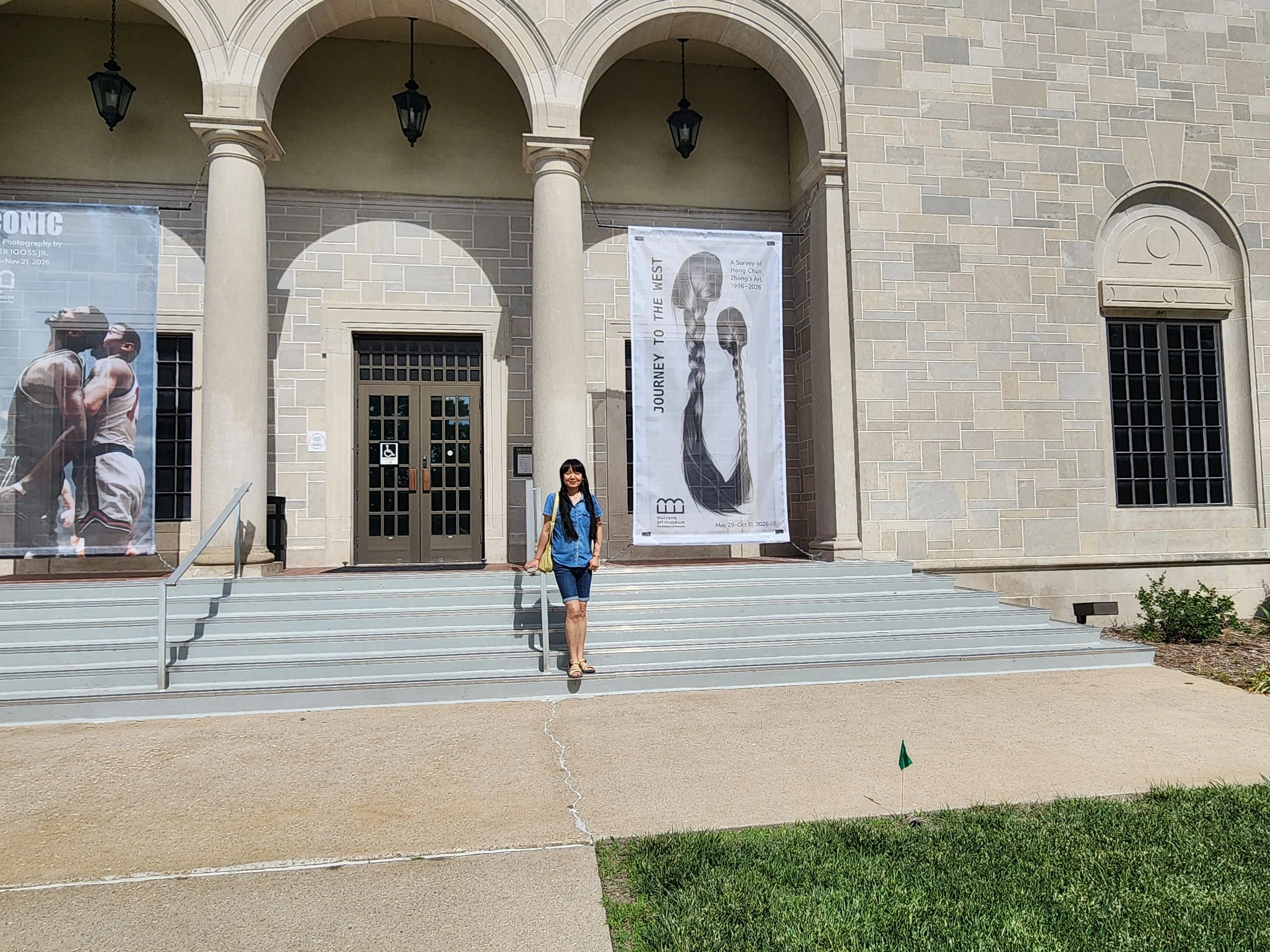
Hong Chun Zhang in front of the Mulvane Art Museum
Q: When did you start preparing for your show, Journey to the West?
A: I think in Fall last year, when the curator asked me, I said this year I have three solo shows, so if she’s looking for a new body of work, I couldn’t make a new series, but I could show existing work. So, she could choose a few pieces from each series and put it together, and then she realized she said, " You know it's for 2026,” so we came up with the idea of showing work from just before I came to the US in 1996 to 2026, exactly 30 years.
Q: How has studying Chinese ink painting impacted the way you approach your art practice?
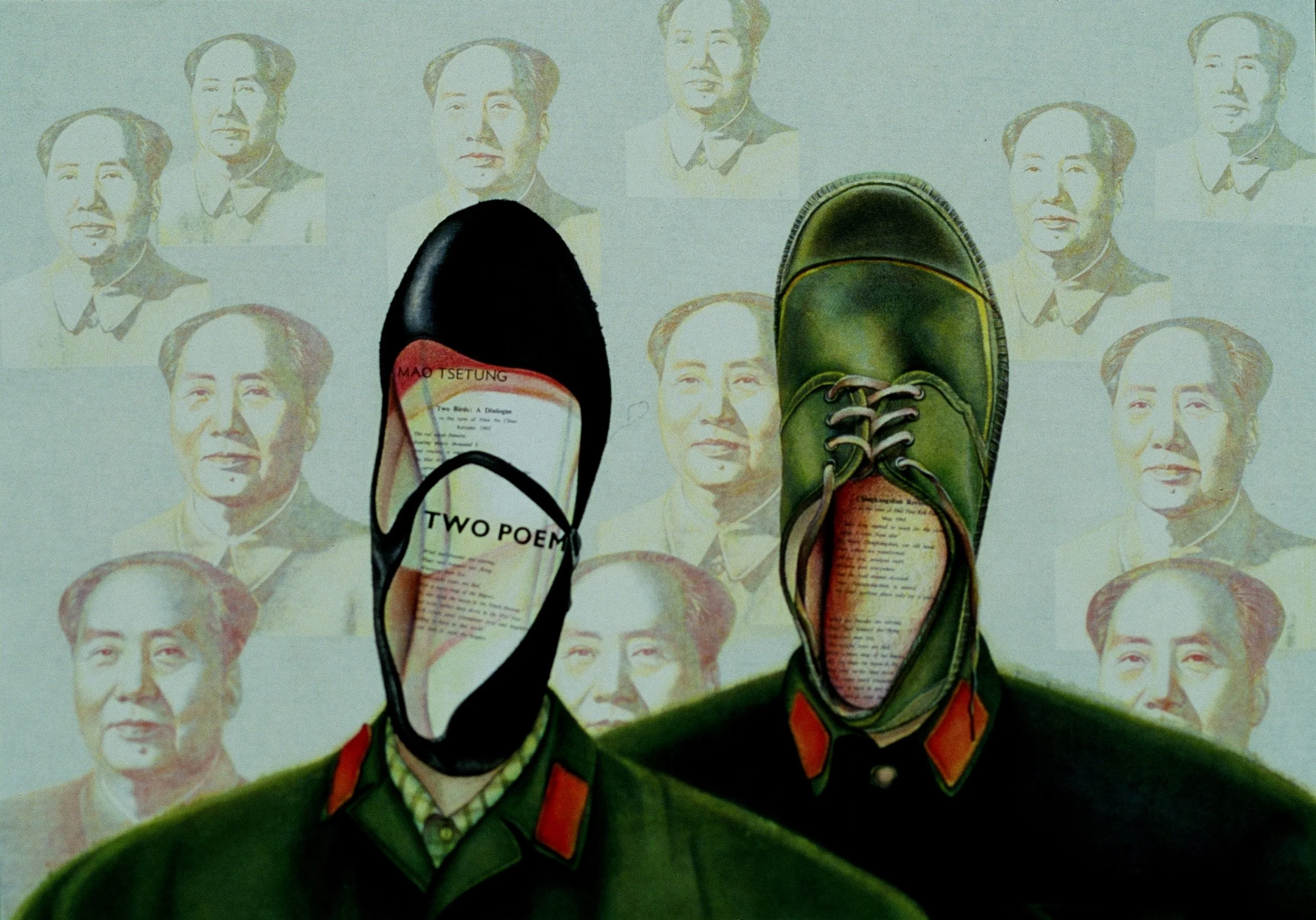
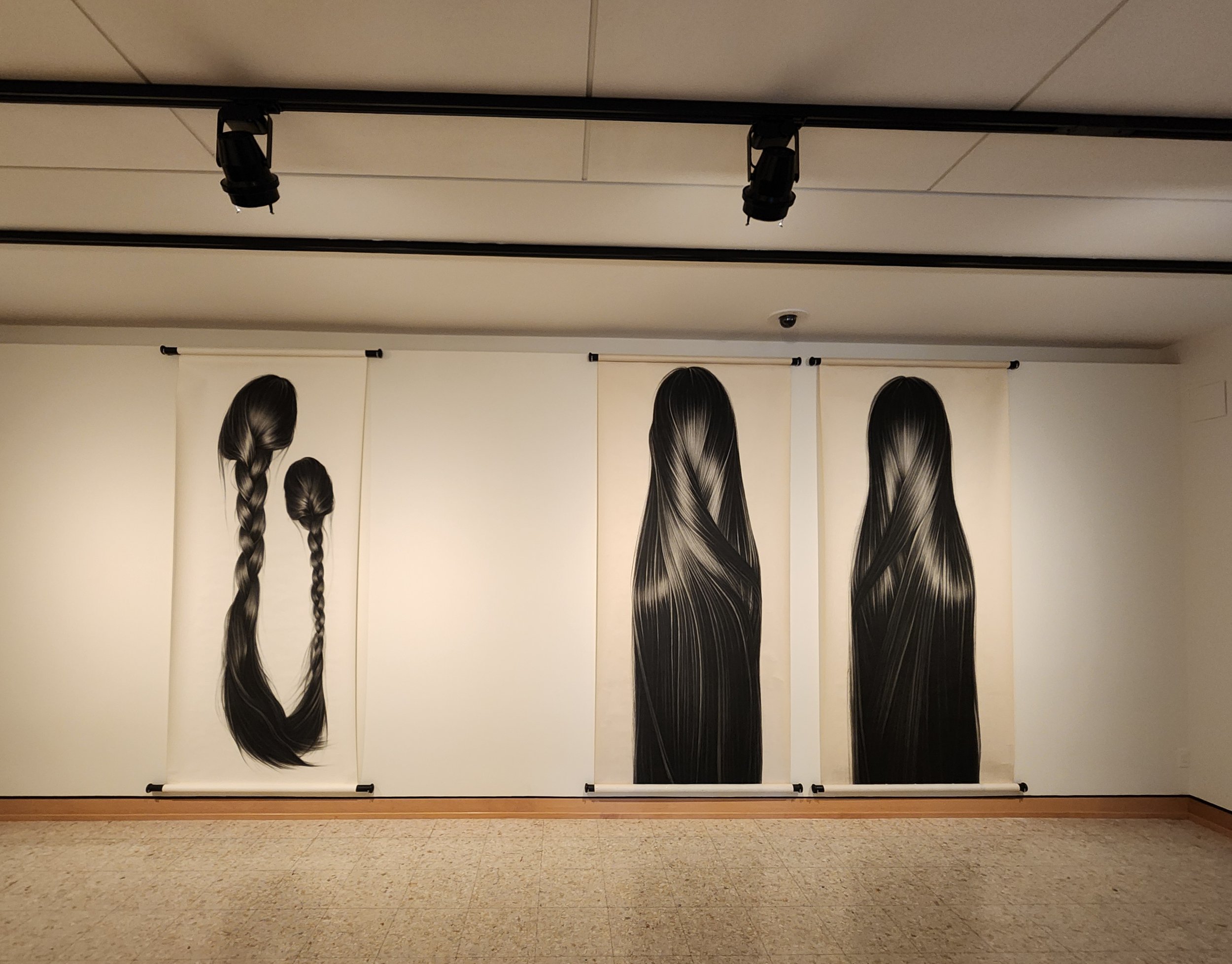
A: Most older Chinese art students who were trained in China all started from the same training background, which is a realistic style that can be any medium, such as oil painting or printmaking. The reason why I chose ink painting first was my influence from my dad, who, early on, taught traditional Chinese ink painting. When I started my first professional art training at the age of 15, I went to the Central Academy of Fine Arts in Beijing for four years. I learned foundational courses, including different mediums and Eastern and Western art histories. Then, in the last year, we had to take the national college entrance exam, and that time, you were able to choose a concentrated area, so I chose Chinese ink painting. The test for that was different from other media; there were more intensive areas. You had to take a test of calligraphy and line drawings. At that time, in the late 80s and early 90s, in Chinese art school, we were not allowed to study other mediums besides our chosen one. Nowadays, the Chinese art schools pretty much follow a more residency art school approach the first two years, you have foundational courses and choose any mediums you want, and in the last two years, you can get into a certain concentrated area so with that translated well when I came to America. I still kind of follow the same realistic style, adding more western surrealistic aspects, and making larger-than-life-size work on paper, because I wanted to make a breakout experience from traditional small ink medium and make it larger. So, when I started graduate school in the US, I took that training background and translated it to a large scale. More recently, I'm interested in making site-specific projects
Q: How did you see your themes evolve when settling into Lawrence?
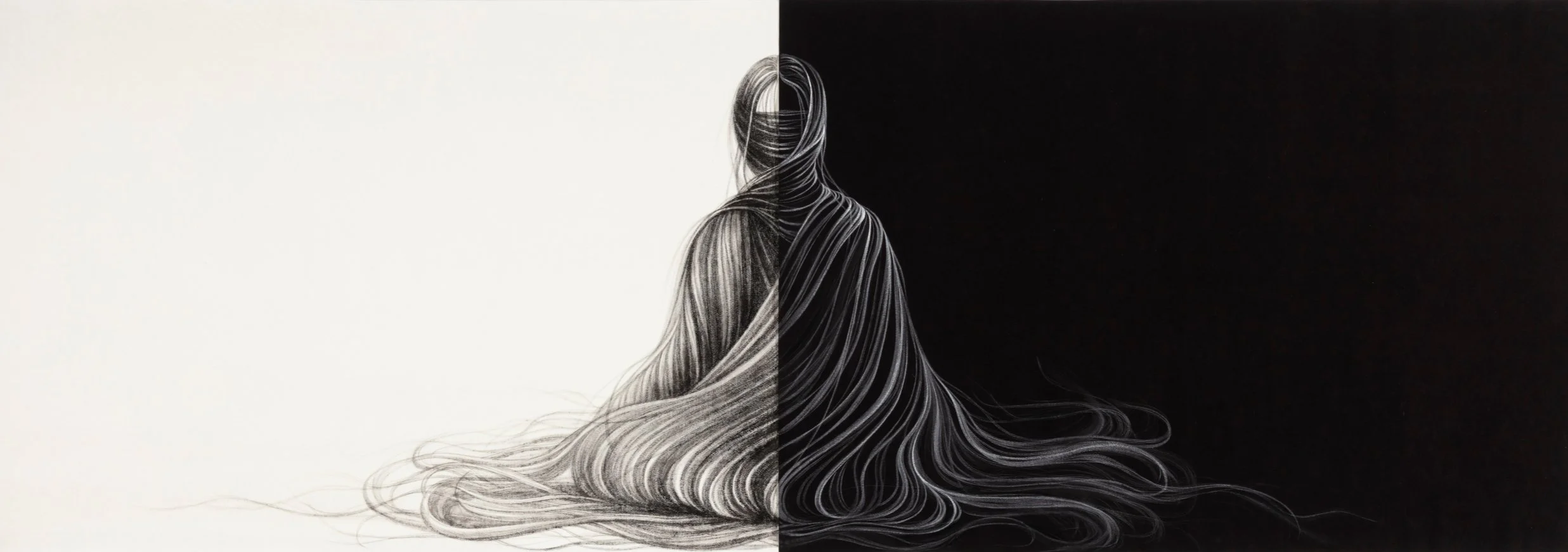
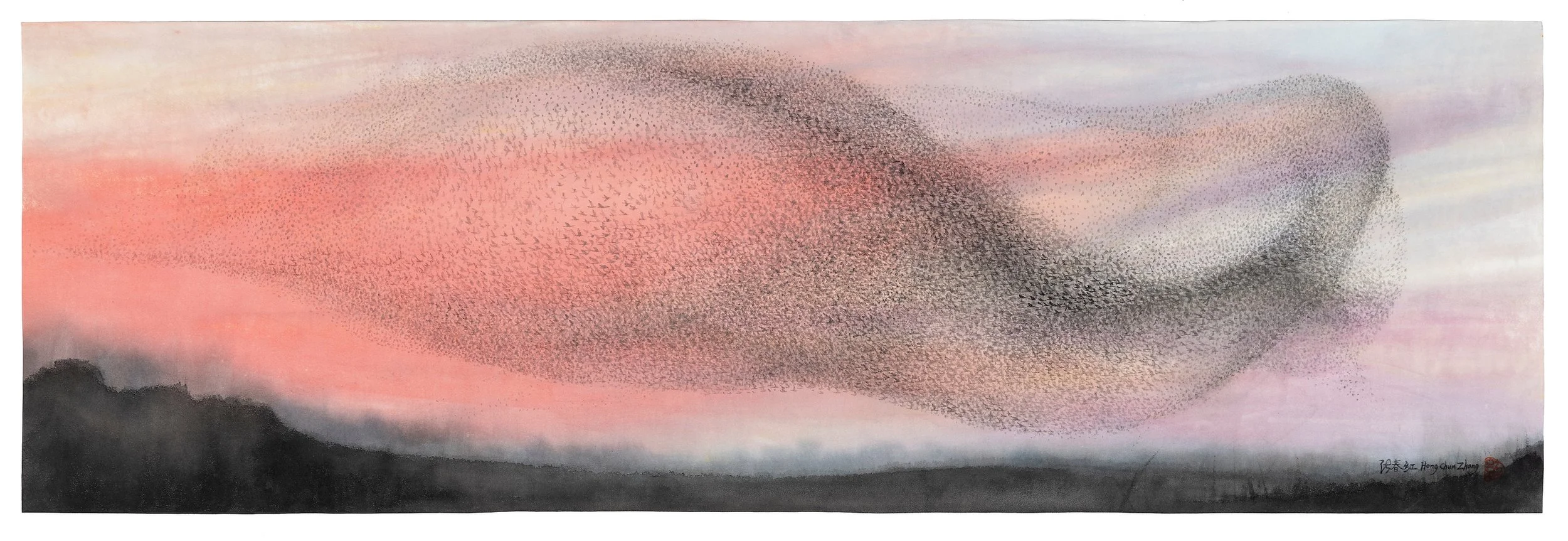
A: When I was in grad school in California, my work started to take on a traditional style, but in long hair-themed work. But after I relocated to Lawrence, I started combining my hair imagery with the Kansas environment, so I was more interested in how my environment became my immediate inspiration. I was always interested in iconic imageries, so tornadoes seemed like a way to help me create hair pieces from static hair and have more movement.
Q: What was the hardest part of continuing your art practice after immigrating to the US?
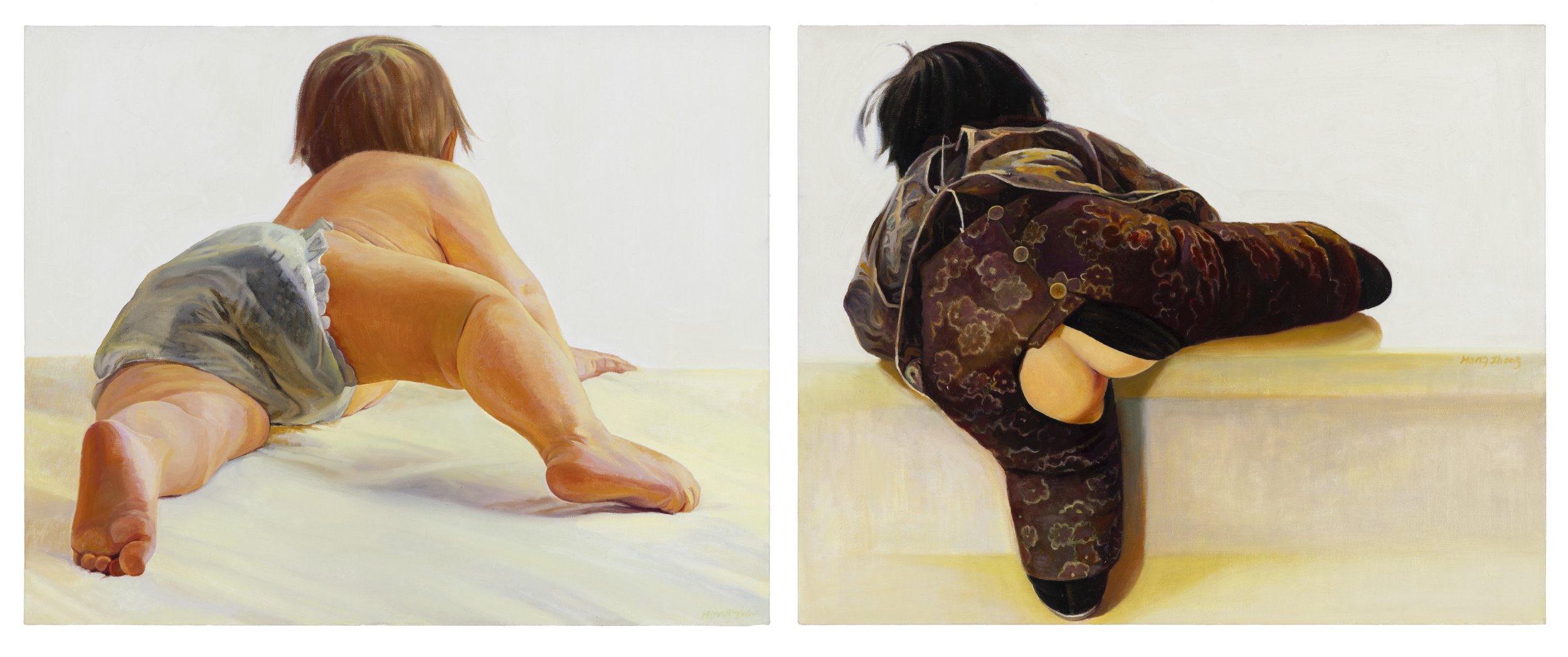
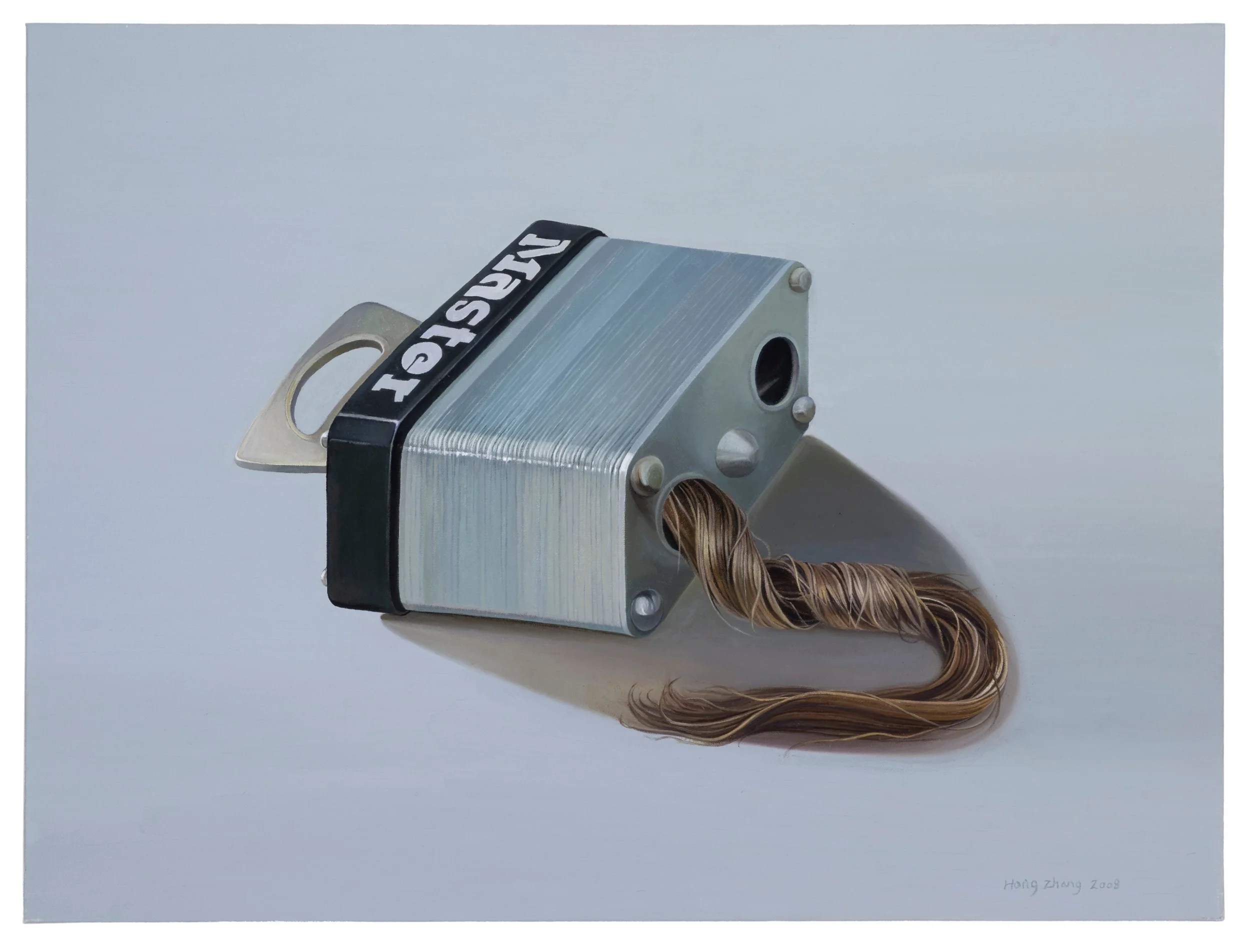
A: I think I would say the conceptual transition, how find my own voice and my own identity took me 2/3 years to realize I’m no longer a majority Chinese in China, I became a minority in the US and how I can use my strength back to China and add to a new understanding of American culture into my work, shifting my thoughts without losing my Chinese heritage and tradition and still be able to fit into an American art context. So also the audience plays an important role because after I came to the US, you can see from my 30-year survey show, the first body of work was still very traditional Chinese ink medium. Even the concept is about my family history, so a lot of the American audience couldn’t quite get it. I had to give background information so they could better understand. That took me a while to readjust to my audience in the US. How could I make new work that becomes more accessible to Western audiences? Over the years, I started reducing more Chinese culture elements and added new mediums that are familiar to Western audiences, for example, charcoal on paper rather than ink on rice paper, and also experiences like oil paintings or large-scale site-responsive work, or doing a two culture series to juxtapose Chinese traditional elements and American elements to show the similarities and differences. I was hoping the audience would look at one aspect and understand the other.
Q: What is your favorite part of the prairie landscape?
A: I think the openness: the beautiful skyline, the constantly changing sky color, and sunset. Also, the horizon, you know, when you usually see traditional Chinese landscape, you always have a middleground, a foreground, and a background. You rarely see the open field, so that really struck me when I came to the Midwest, to see the clouds, the sunset, the endlessness. You just keep driving and see the landscape. It's just so beautiful, and then the tornadoes. I've never been really close to one, but just to see the unexpected weather and the landscape, I feel like I'm in a very beautiful world.
Journey to the West: A Survey of Hong Chun Zhang’s Art, 1996–2026, will be on view at the Mulvane Art Museum from May 29 to October 10, 2026.