
5 & 5 With Emily Blair Quinn
Assistant Gallery Manager and Staff Writer Jaede Bayala sat down with AIR Emily Blair Quinn for a studio visit.

Q: How do you know when a painting is finished?
A: Such a good question. With this painting, I was working on the title yesterday, and that actually helped me think through what felt finished and what didn’t. The title that I came up with is After Ever. I was thinking of it as a little puzzle to get the viewer to “happily ever after.” I am very inspired by fairy tales, and the facial expressions in this painting complicate the familiar fairy tale ending. You have this flushed, angry man who seems overwhelmed by his emotions leaning over a woman who looks bored and completely over it. Then there are these onlookers in a carriage in the background who are observing the drama. I want people to think about the way that the wedding is often presented as the end of the fairy tale and to imagine what happens after the wedding—whether it’s really a happily ever after.
I use reference photos to help determine when a painting is finished, but as I get into the final stages, I often return to the original objects, looking closely at them to make sure there isn’t anything I want to add that wasn't captured in the photograph. So, the further I get into a painting, the less I rely on photography and the more I rely on my intuition.
Q: How often are you trying to stay true to the color of either your reference or your figurines?
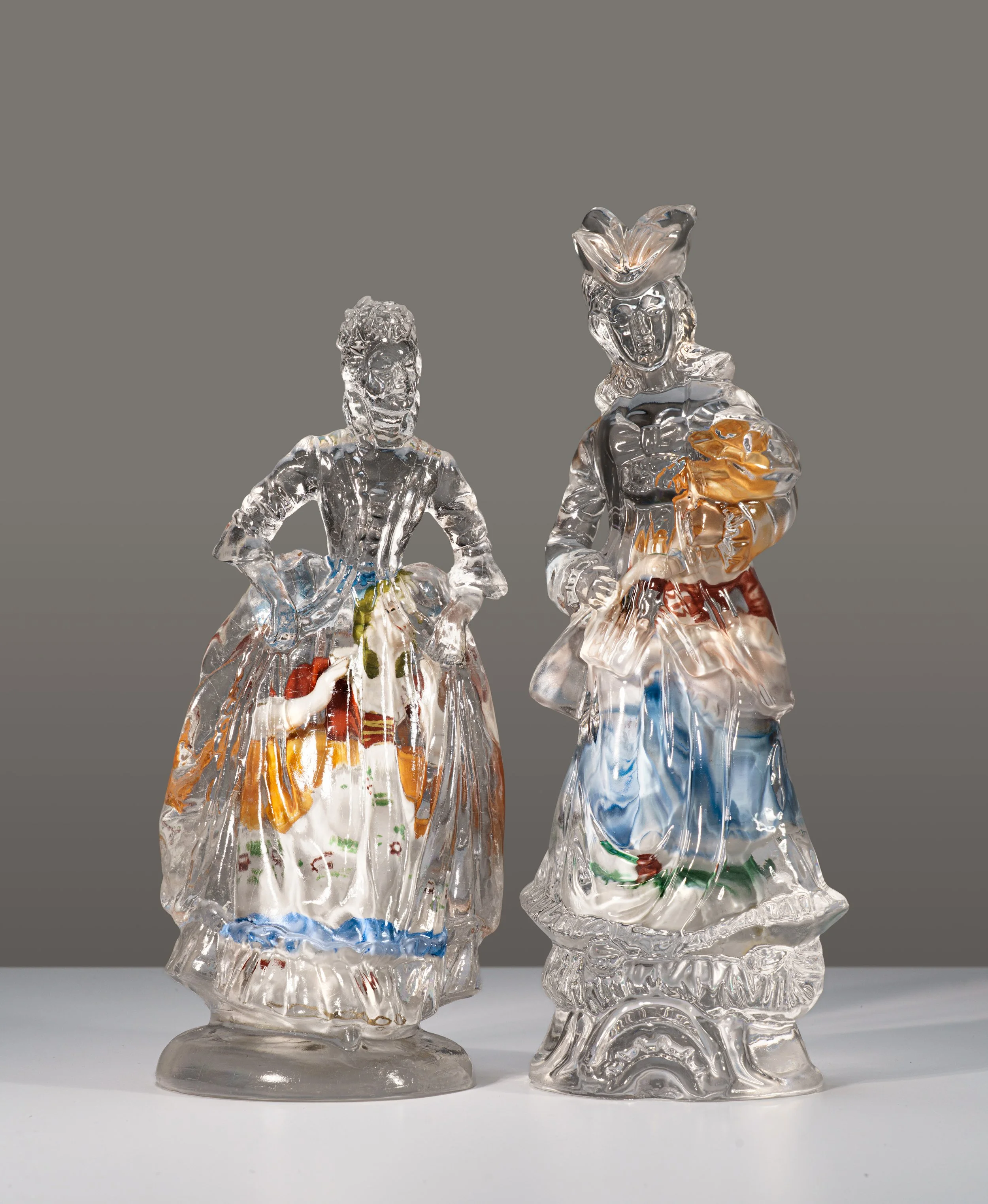
A: Sometimes I am initially attracted to an object because of its color when I'm hunting for figurines in thrift and antique stores. When I bring them back to the studio, I stage them in scenes that emphasize different color combinations. The back of my studio is devoted to my sculpture and photography practices, where I set up objects in scenes, using dollhouses and miniatures, and then light and photograph them. As I am working, my mind starts creating a narrative, and there's a lot of playful experimentation in choosing the subject, the background, and the relationship between the two. The colors I'm seeing are an important part of those decisions. I often use the figurines the way I find them, but I also have a desire to customize them and change the color and the translucency. Casting them in resin gives me more creative control and allows me to push them further, making them feel more ghostly, psychological, or playful.
Q: When did you start noticing yourself gravitating to the figurines to use as subject matter for your paintings?
A: They're all connected to my grandmother. She collected this particular style of vintage, Victorian, and Gilded Age figurines, so I grew up seeing them all the time. They carry a strong sense of nostalgia for me, but they also contain so many ideas about gender, class, whiteness, etc. I was raised in a very conservative Christian environment in Alabama, and I was taught to be a very specific type of “Southern lady,” but I don’t fit that mold. So these objects represent some of the stereotypes about women that I am investigating and pushing back against. The figurines are meant to be sweet and cute, but in my work, I'm giving them a full range of human emotions—sadness, rage, pleasure, boredom. I want to flesh them out as well-rounded characters and give them more agency. I'm also using them to think about stories and ideas for a more hopeful future.
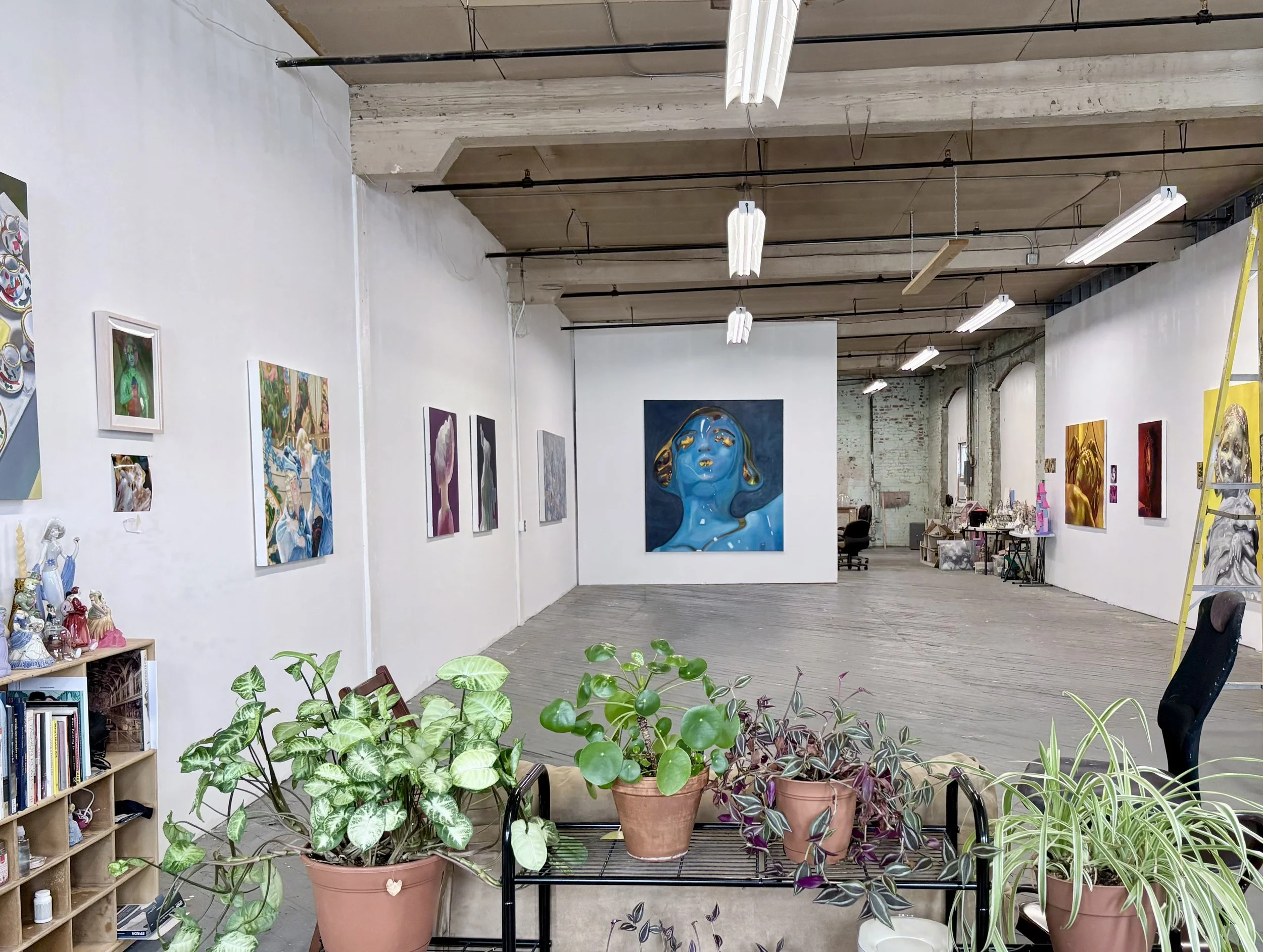
Emily’s studio
Q: What does a day at the studio look like for you?
A: I'm usually here five or six days a week, arriving around 10:00 am and working until 5 or 6 p.m. One of the things that's been so amazing about this space is I can work on more than one thing at a time, which I wasn’t able to do in my previous studio. I can start the day by making some resin castings, then paint or photograph scenes while the resin cures in the pressure pot. Being able to move between the different mediums and set things up and leave them in place allows me to work faster and more efficiently. It also allows me to plan much farther ahead. I'm preparing for a solo exhibition in October and another next summer, so I can lay things out, see how the pieces inform one another, and spend time looking at my work from a distance. The space to step back and reflect helps me decide what I want to do next.
Q: What are some ideas you have for your work moving forward
A: I'm working on several different series at once. I am adding to my Lovers series of paintings, which features cherubs and angels depicted in moments of ecstasy. I am also continuing my Goddess series, which features monumental figures embodying feminine rage, power, and wisdom. At the same time, I am creating multi-figure scenes with a larger number of figures and more elaborate backgrounds. I am also making the resin sculptures larger, learning how to scale them up and experimenting with different ways to display them. And I'm continuing to develop my photography practice. Every time I make a new resin sculpture, I photograph the face embedded in the resin to create distorted portraits. I keep adding to that body of work because, eventually, I would love to exhibit a wall of these portraits with all of the figures interacting with one another. It's exciting and energizing to be in a place where I have multiple projects going on at once. I feel expansive, like anything is possible.