An Interview with Emily Blair Quinn
Studios Inc student volunteer Eden Haghmanesh recently connected with one of Studios Inc’s new AIR, Emily Blair Quinn, to ask her a few questions about her work.

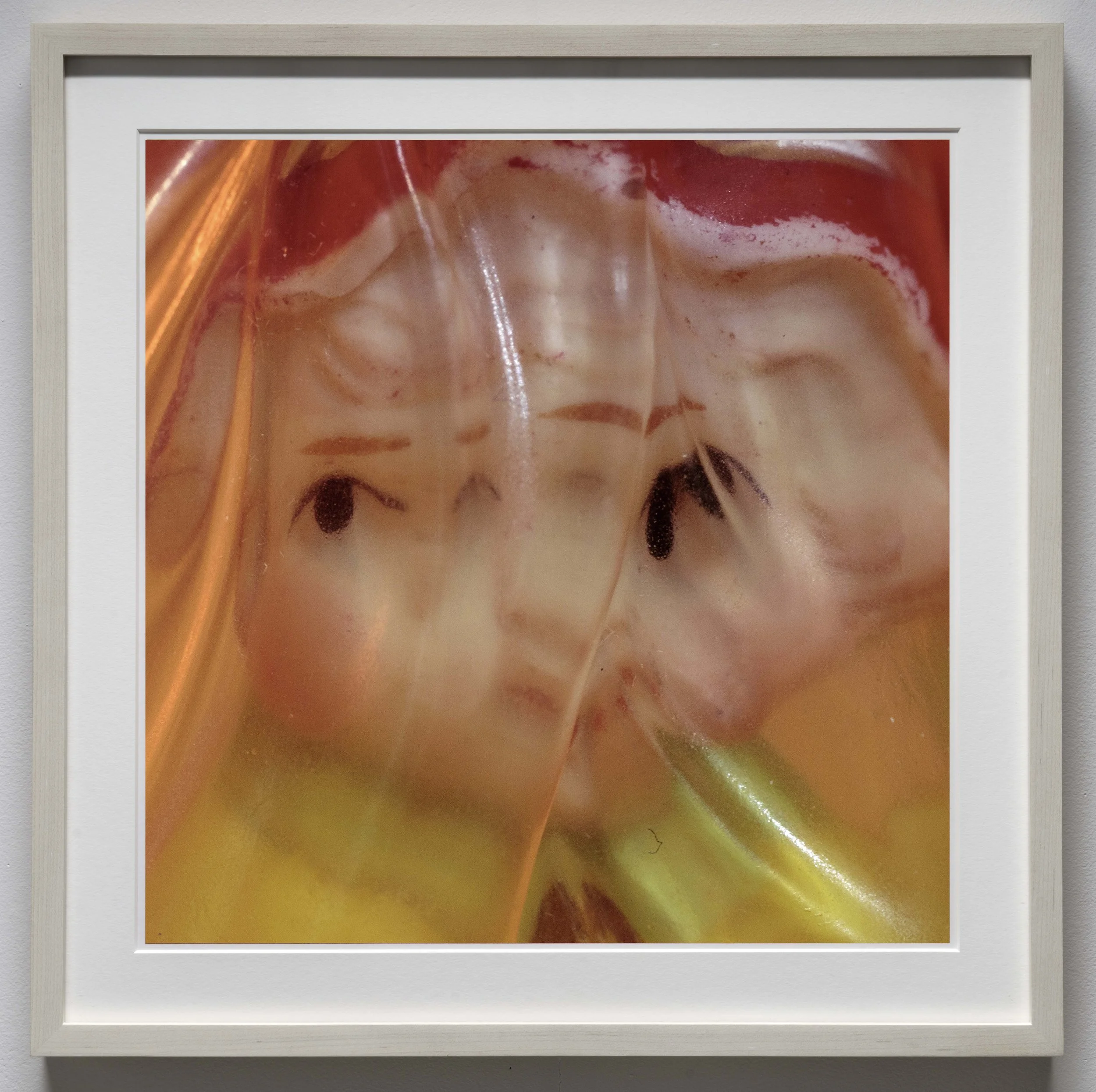
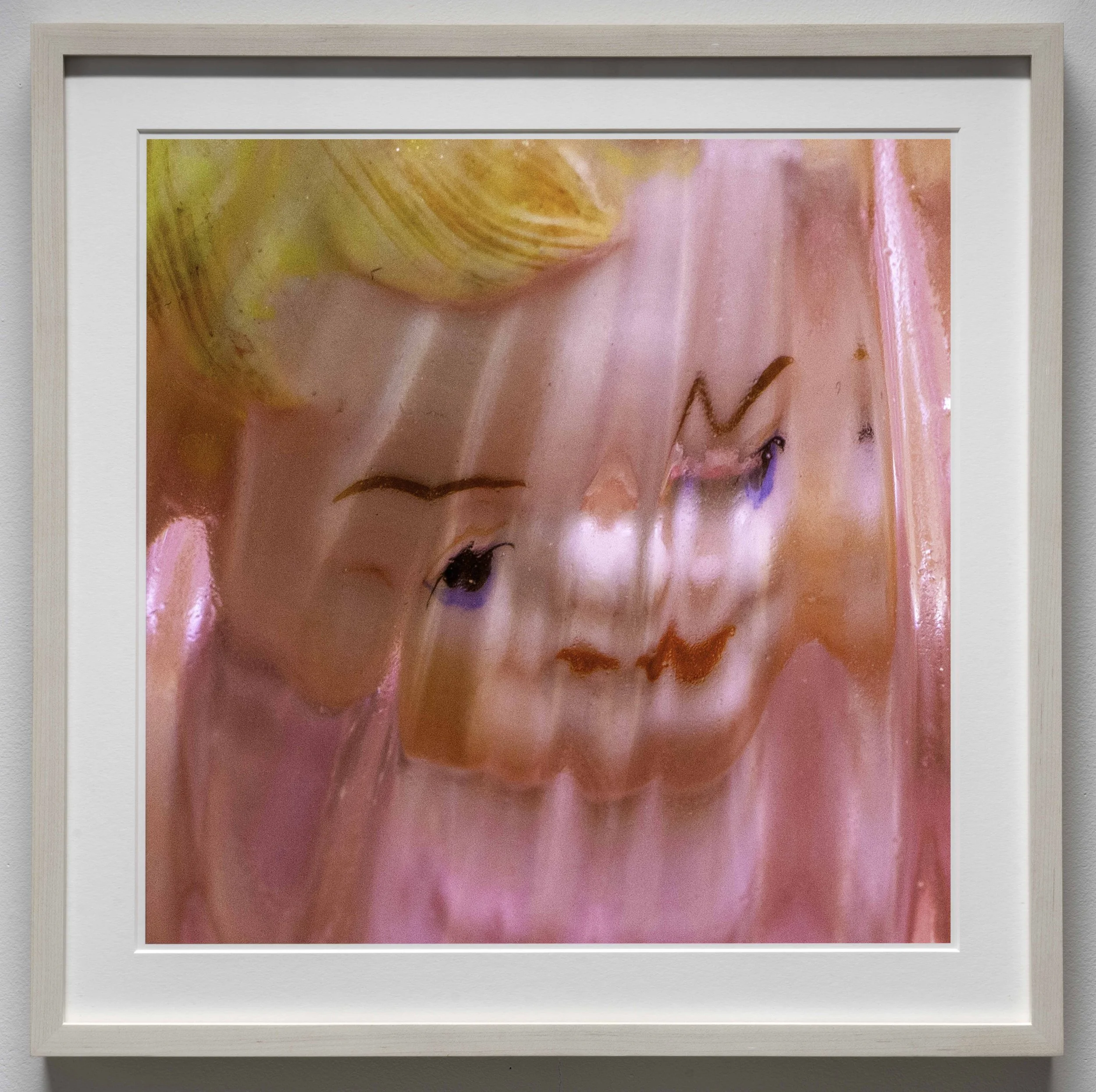
Q: Upon looking at the photographs on your website, I notice that the features of the dolls are blurred within color, is this to represent masking identity?
A: The distortions created by the resin and the refracted colored light abstract the portrait of the object, creating unnatural transitions. I think a great deal about the psychological impact of color, and in my recent “Pink Portrait” series I use the color pink to investigate and critique its gendered associations. The works depict young women and girls, and the resin functions almost like a veil, partially obscuring their features. Each portrait suggests a different emotional state—confusion, sadness, longing, anxiety, boredom, and complacency, among others.
I plan to experiment with how much distortion can occur while our brains still recognize the image as a face. Humans are hardwired to detect eyes, and we are naturally drawn to round, baby-like faces. From an evolutionary perspective, this sensitivity makes sense: we evolved to be highly responsive to eyes in order to recognize both predators and other humans, and we also have strong instincts to care for infants. Our tendency to anthropomorphize objects and perceive faces in unexpected places also helps us make sense of an unpredictable world. Because our own thoughts and emotions are the experiences we know most intimately, we often use them as a model to explain the weird things we encounter.
Q: Is the use of intense colored lighting used to create almost a euphoric sense of the image, making the dolls look as though faded in a ghostly memory?
A: D. Dominick Lombardi recently wrote about this contrast between bright, playful colors and the darker, more complex themes in the work in his review of my exhibition “Insight” for Ines Magazina. He described the resin sculptures as evoking “time and memory as a form of multi-dimensional juxtaposition while the color and tint of the resin makes them seem more innocent and cheery.” I really like that description. I also appreciated that you picked up on the themes of ghosts and memory in your reading of the work—these ideas are very much present in the series.

Dollhouse, 2025, resin, porcelain
Q: I’ve noticed most of your art has to do with the same style of ceramic/porcelain figures, do these represent a specific moment in your life with your grandmother?
A: I collect and use the same style of vintage porcelain figurines that my grandmother collected—mostly Victorian and Gilded Age–style figures of women and children from the turn of the twentieth century. These objects connect me to my past and to my matriarchal lineage, while also allowing me to imagine more hopeful possible futures.
I’m drawn to the aesthetics of these figurines and feel a sense of nostalgia toward them because I grew up seeing them so often. At the same time, I use them as a way to investigate and critique the embedded stereotypes they carry about gender, class, race, beauty, and whiteness.
Although feminism has come a long way, I’m constantly reminded that today’s standards are still very much lacking when it comes to gender norms. And while this style of mass-produced collectible figurine has largely gone out of fashion for my generation, the fascination with Victorian-era aesthetics certainly hasn’t. You can see that continued interest in popular television and film, in shows like Downton Abbey and Bridgerton, as well as the most recent adaptation of Wuthering Heights.
Q: In your resin art there are bubbles within it, do you purposefully leave imperfections to add to the disoriented, euphoric and haunted look to further create a sense of estranged memory?
A: I work very hard to keep bubbles out of the resin. I use both a vacuum chamber and a pressure pot to remove them, and then finish each piece with a labor-intensive sanding and polishing process. You might still find a small imperfection here and there, but those are usually part of the original porcelain object that was transferred into the cast.
One thing I really appreciate about these objects is that, although many of them were mass-produced, they were still hand-painted. That means each one is slightly different, and sometimes you’ll see small “mistakes” or inconsistencies—little traces of the human hand that made and painted them.
Q: When you position your figures to be cast, they are positioned in almost in a Kubrick stare type way, is this done on purpose to create discomfort in the viewer?
I love horror films and am especially interested in the way some of them use the Kubrick stare to convey psychological intensity or derangement—films like A Clockwork Orange, The Shining, Psycho, and The Silence of the Lambs. My favorite horror film is Hereditary, which follows a grieving miniature artist whose family is haunted by increasingly sinister events. I’ve always been fascinated by the house in the film, which was built on a soundstage to resemble a dollhouse.
Dolls occupy a special place in the uncanny valley because, unlike puppets, they are almost always immobile. Their features are fixed in place, almost like a mask, which creates an atmosphere of silence and stillness and a tension between subject and object—between the animate and the inanimate.
While I’m not consciously thinking about the Kubrick stare or specific horror films while I’m working, I do think a lot about the gaze and the viewer’s relationship to the objects in my paintings. When I confine a fragile porcelain figure—like a frightened or crying little girl—to a small canvas, the viewer is placed in the role of aggressor or voyeur, as in Cornered and She Wept. When I paint her as a monumental, goddess-like presence with blazing eyes on a large canvas, the power dynamic shifts, as in Protect Your Heart and Lady Liberty.
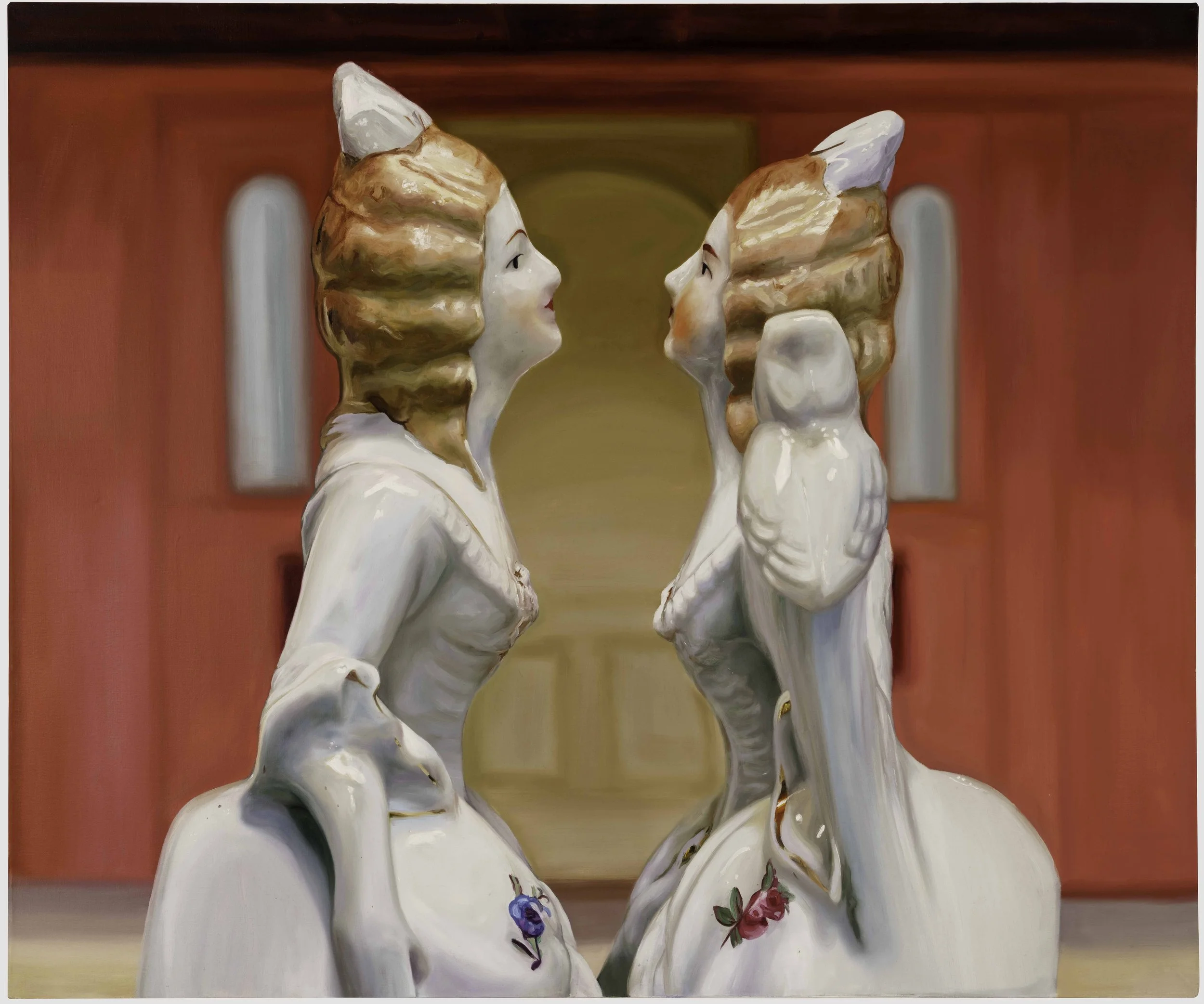
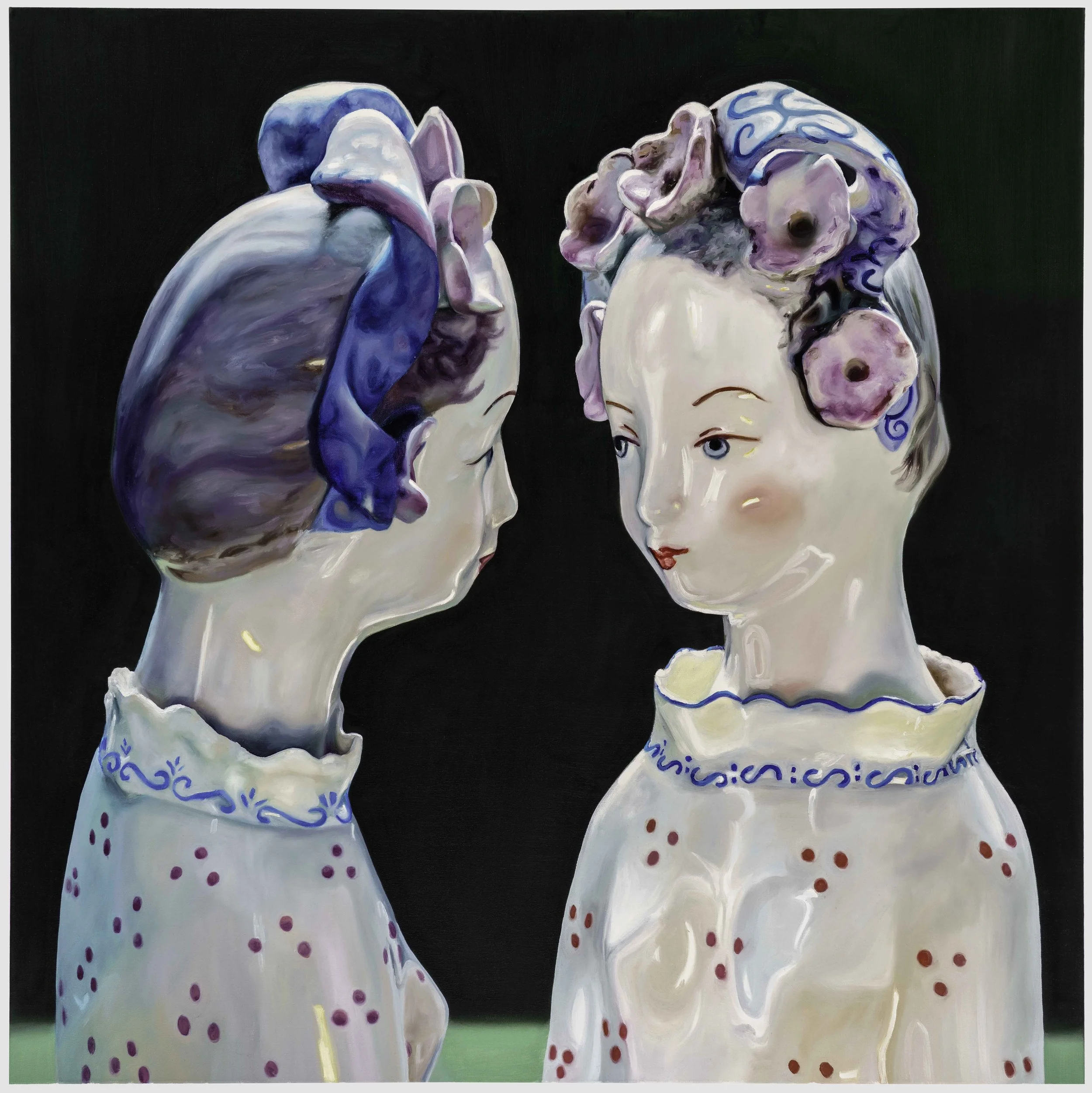
I also enjoy painting multiple versions of the same object observing one another, collapsing the distinction between viewer and viewed. These double portraits can be read as sisters, twins, or psychological reflections of the self, as in May Day, Pecking Order, and Alter Ego.